
Contents
Despite well-established guidance and industry awareness, incidents involving vehicles and pedestrians continue to occur across Waste and Recycling sites. This was something we explored at our recent webinar.
In most cases the causes aren't unknown risks, but the result of everyday operational realities that gradually weaken the effectiveness of safety controls.
But what are these realities? And how can you overcome them?
Box Ticking
Many sites have traffic management plans, risk assessments, and procedures in place. However, these documents can sometimes become static compliance exercises rather than living operational tools.
Over time, site layouts change, workloads increase, and the job evolves. If traffic plans aren't reviewed regularly and adapted, the controls they describe may no longer reflect how the site operates.
When this happens, staff may begin to rely on informal ways of doing things rather than the intended controls.
Controlling the uncontrollable
Sites will always be faced with uncontrollable variables.
Picture this scenario:
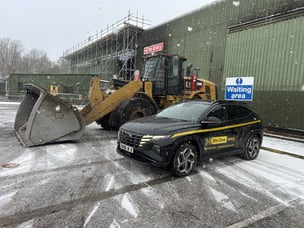 It’s 2 January, 2 people called in sick, you’ve got extra trucks dropping off after the Christmas shutdown, you’re managing additional seasonal contract workers, the conveyor belt has just gone down, and it’s snowing.
You can’t stop these things happening and you can't plan for every single eventuality, but you can design systems that remain robust even when conditions change. For example, clear site rules, effective supervision, engineered controls and good communication help ensure that safety is maintained even during disruption or periods of increased pressure.
Operational Pressure - Busyness
A customer we spoke to recently highlighted busyness as one of their biggest risks. Waste and Recycling sites are busy, fast-moving environments. Vehicles are arriving, tipping, loading, and leaving throughout the day while site staff carry out inspections, maintenance, picking, or other tasks.
When you’re under pressure and rushed, shortcuts can emerge. Pedestrian routes may be ignored (we’ve all seen the CCTV footage the HSE shared of Biffa employees continually ignoring a segregated pedestrian route), temporary practices can become ‘the way we do things’, and supervisors may prioritise throughput over process.
Over time, these behaviours can erode the effectiveness of otherwise well-designed control measures.
Human behaviour
We don’t always do things the way they should be done. We're human and don’t act like robots. Often people are trying to help and act without thinking. They may have had a personal tragedy, argument, or sleepless night. This will affect how a person thinks, acts, talks, and reacts on site.
Did you know a sleepless night is equivalent to having a blood alcohol content (BAC) of 0.10% (100 milligrams (mg) of alcohol per 100 millilitres (ml) of blood). That’s above the legal driving limit of 0.08%.
Temporary site changes
 Many plant to pedestrian risks emerge during temporary or unexpected changes to site operations. This was a key finding by the HSE in a case where a waste company was fined £250k after an employee was run over by a loading shovel on his first day of work.
This could be:
- A fire requiring major site layout changes
- Maintenance work requiring altered routes
- Temporary stockpiles affecting visibility
- Contractors unfamiliar with site rules
- Changes to traffic flow during busy periods
Without clear processes for managing these changes, new risks between vehicles and pedestrians can quickly appear.
This highlights the importance of regular review and re-enforcement rather than relying solely on fixed plans.
It was positive to hear during our webinar that 81% of respondents had reviewed their workplace transport plans in the last year. But only 23% had reviewed them in the last 6 months.
Re-enforce, re-engage, review
While a lot of these things are out of your control, if you're continually re-engaging with staff and reviewing your site practices, you can make sure that risks are identified and tragedies stopped.
And as Paul Stokes, Group SHEQ Director, FCC Environment UK said,
"…. It's amazing how quickly complacency can creep in with people, so using an extra control mechanism not only helps keep people safe but also reminds them of the serious danger of getting too close to machinery.”
This article is taken form a recent webinar held by SiteZone on Plant Pedestrian Safety in Waste & Recycling: What Good Really Looks Like.
You can watch the full webinar here.